
Supporting Island Shops in Quiet Months: A Local Guide
Practical ways to keep island high streets trading through the quiet months, from small weekly habits to...

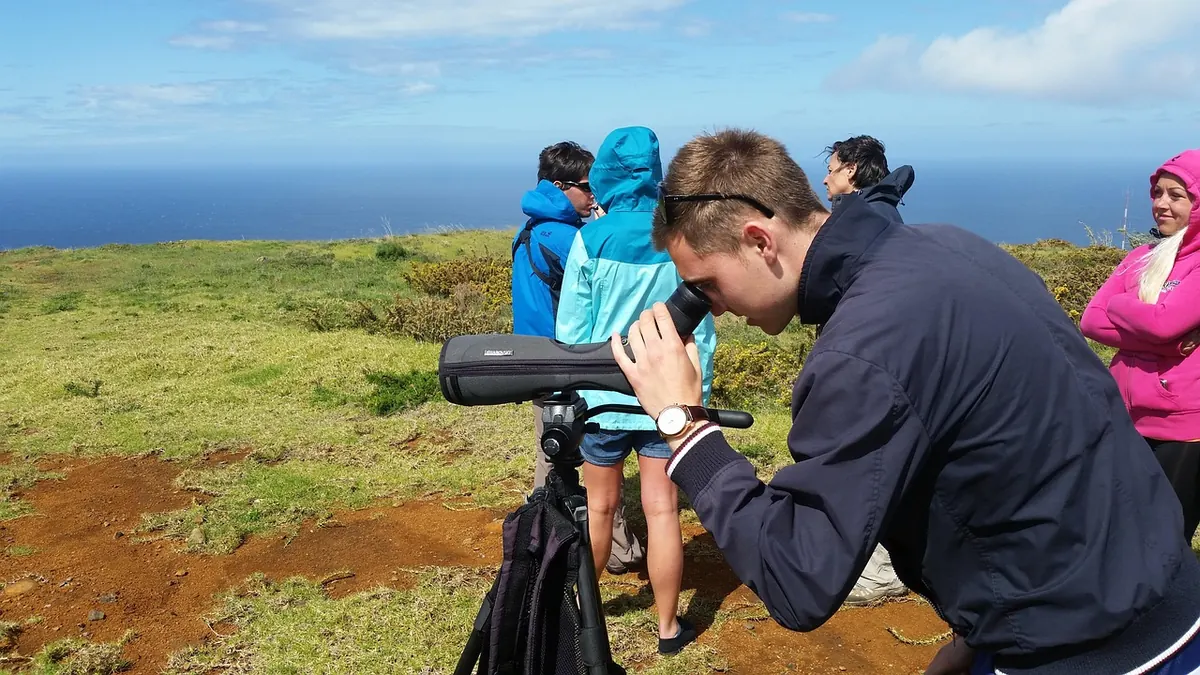
Spring reaches the islands before it reaches most of the mainland. By mid-March the first wheatears are flicking along coastal walls, guillemots are packed onto ledges, and rockpools have started to feel warm underfoot. If you have never spent a morning watching wildlife on an island, this is the season to begin. Birds are busy and noisy, days are long, and you need very little beyond binoculars, boots and a decent waterproof.
Islands concentrate things. A small landmass surrounded by sea offers fewer places to hide, so wildlife tends to be easier to find, and the species list is often unusual. Some islands have no foxes or grey squirrels, which is why red squirrels and ground-nesting birds survive on them. Others sit directly on migration routes, so a spell of southerly winds in April can drop willow warblers, swallows and the odd hoopoe into a single sycamore.
Seabirds are the main event. From March onwards, cliffs that looked empty all winter fill with guillemots, razorbills, kittiwakes and fulmars, and puffins return to their burrows. Few other places in Britain give you that volume of noise and movement within a few hundred metres of a footpath.
Timing shifts with latitude: spring on Scilly or the Isle of Wight runs a fortnight or more ahead of Shetland. Treat the list below as a rough running order rather than a calendar.
Most seabird colonies are visible from a coast path, which is the safest and least disruptive place to be. Scan the ledges below with binoculars, then watch the air: fulmars glide on stiff wings, peregrines will put everything up at once, and choughs — in Wales, the Isle of Man and Cornwall — turn on the wind and call. Stay back from edges, and keep to the path near puffin burrows, which collapse easily under a boot.
Go on the low water of a spring tide and you get an hour or two of the best marine life in Britain. Beadlet anemones, limpets, crabs and small fish are all easy to find; turn a stone only if you can put it back exactly as it was. Oystercatchers, ringed plovers and turnstones work the strandline, so check a tide table before you set out and give yourself an escape route.
Adders bask on south-facing banks in the morning sun, and if you see movement, stop and wait rather than stepping closer. Meadow pipits and skylarks sing overhead, short-eared owls hunt at dusk, and hen harriers quarter the moorland of Orkney and the Outer Hebrides. Machair in May carries more flowers per square metre than almost anywhere else in the country.
On islands with red squirrels — the Isle of Wight, Brownsea and Anglesey among them — the first hour after sunrise is the best chance of seeing one, ideally near feeders or in mature conifers. Bluebell woods and hedgerows also hold the first warblers back from Africa.
Find a headland, sit comfortably and watch the sea for twenty minutes before deciding nothing is there. Harbour porpoise, common dolphins, gannets diving and grey seals hauled out on rocks all appear with patience. On Skomer, Skokholm, Lundy, Rum and Canna, Manx shearwaters gather in rafts on the water at dusk before heading to their burrows in darkness.
The two hours after sunrise and the two hours before sunset do most of the work. Birds feed hard, owls and shearwaters become active, and day visitors have not yet arrived. Butterflies and basking reptiles need sunshine, so save open ground for bright, still mornings; seabird cliffs are fine in almost any weather, though the best seawatching follows a spell of onshore wind.
Tides matter as much as time of day. Low water opens the shore, high water pushes waders onto roosts where you can watch them without moving. A calm, overcast afternoon is often better than a bright one for watching animals behaving naturally.
Spring is when animals are most vulnerable, and the difference between watching and disturbing is usually distance and noise. A few habits will keep you on the right side of it.
Many nesting birds, seals and some plants are legally protected, and disturbance can be an offence. If you are unsure what applies where you are going, ask the local wildlife trust, the reserve warden or the landowner before you set off. Recording what you see is genuinely useful too: local records centres, county bird recorders and schemes such as iRecord all welcome sightings from visitors.
A telescope is a luxury, not a necessity, unless you plan to spend hours on a seawatch. A camera with a decent zoom is often more useful than a long lens you cannot hold steady.
Pick one site you can reach easily and visit it at the same time of day across several weeks. Sit still for twenty minutes at the start; most of what is there will show itself once you stop moving. Take note of the tide, the wind and what is flowering or calling, and you will begin to read the season rather than simply ticking off species.
If you would rather learn alongside someone, local wildlife trusts and bird clubs run spring walks and survey mornings that welcome beginners. Safety first on the coast: tell someone where you are going, watch for cliff edges and rising tides, and turn back early if the weather changes. Then go out, keep quiet, and give it time.
Photo: GalinaKon / Pixabay
Practical ways to keep island high streets trading through the quiet months, from small weekly habits to...
A practical winter island packing guide covering waterproofs, warm layers, torches, offline maps and...
From off-island and the boat to grockle and island time, here are the twenty terms you'll hear most on an...